
Nigeria is now frequently cited globally as an example of steady, credible reform leadership, World Bank’s Managing Director of Operations Anna Bjerde said yesterday
The World Bank chief made the remark yesterday during a meeting with President Bola Ahmed Tinubu and Vice President Kashim Shettima at the State House, Abuja.
With the President to receive her were the Minister of Finance and the Coordinating Minister of the Economy, Wale Edun and the Deputy Chief of Staff (DCoS) to the President, Ibrahim Hassan Hadejia.
Anna Bjerde was accompanied by other officials of the institution.
The World Bank Managing Director praised Nigeria’s reform progress over the past two years, particularly the government’s consistent resolve to stay the course despite challenges.
The consistency and the clear evidence of positive results, she noted, have built strong confidence among investors, policymakers, and the private sector.
The Bank chief highlighted the forthcoming Country Partnership Framework as being firmly anchored in Nigeria’s own development vision, particularly the goal of achieving a $1 trillion Gross Domestic Product (GDP) and seven per cent growth.
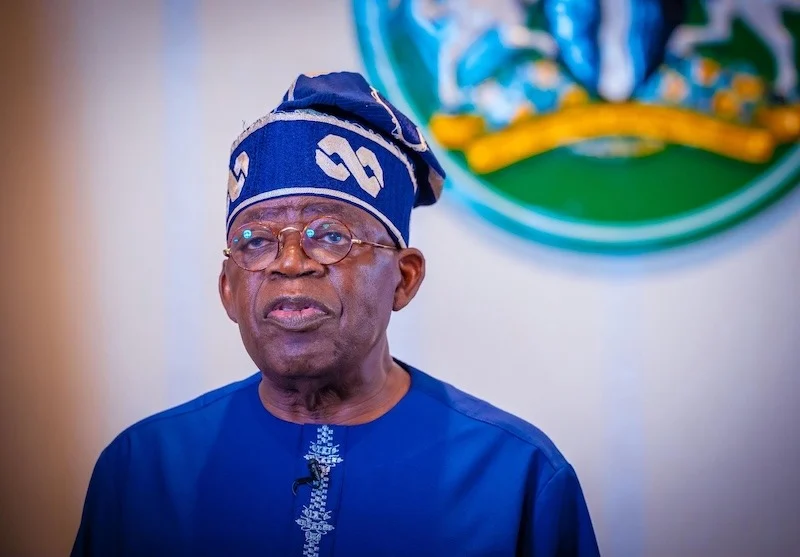
President Bola Ahmed Tinubu reaffirmed the government’s commitment to the ongoing economic reforms, acknowledging that though the process has been challenging, “there will be no turning back.”
The President stressed that while the subsidy removal and the unification of exchange rates initially triggered inflation, it has since reduced significantly, and the naira has stabilised, improving investor confidence and ease of doing business.
President Tinubu highlighted agricultural transformation as a priority of his administration, noting that investments have been made in the sector through zonal mechanisation centres, improved seed development, and fertiliser availability, supported by the growing petrochemical industry, to boost yields and move farmers from small-scale operations into strong cooperatives.
“Nigeria is the heart of the continent, and we must do what’s necessary to strengthen the economy, particularly looking at the young population of this country, looking at the vast area of arable lands.
“How do we employ mechanisation and make agriculture easier? I have embarked upon that. We have created zonal mechanisation centres to help the farmers,” he said.
The President called on the World Bank to deepen its partnership with Nigeria by accelerating financing options, reducing bureaucracy, sharing development models, managing risks, and building local skills to fast-track inclusive growth and prosperity.
During the meeting, the World Bank chief underscored the importance of improving access to finance for small, medium, and large enterprises, especially mid-sized firms, which are key drivers of employment.
She acknowledged Nigeria’s focus on strengthening early childhood development as essential to long-term productivity, and assured the Bank’s support in this regard.
“Many countries around the world, even middle-income and upper-middle-income countries, are suffering again with rising levels of stunting. And here, we’ve identified early childhood development as a strong entry point. So, all of this, to say we’re looking forward to a new country partnership framework,” she said.
She reaffirmed the World Bank Group’s commitment to a programme aligned with Nigeria’s priorities, combining public and private sector support.
Bjerde stressed that the World Bank Group, through its institutions, the International Development Association (IDA), International Bank for Reconstruction and Development (IBRD) and the International Finance Corporation (IFC), is ready to continue to support Nigeria’s reform agenda.
Follow the OSUNDOTLIFE channel on WhatsAppKindly share this story | All rights reserved. This material, and other digital content on this website, may not be reproduced, published, broadcast, rewritten or redistributed in whole or in part without prior express written permission from OSUNDOTLIFE.
Contact: editor@osun.life
WhatsApp: 📲 +2348092333666