
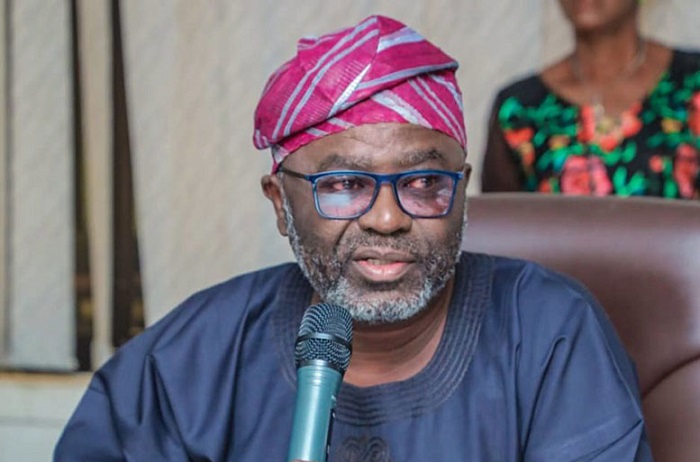
South-West Development Commission (SWDC) has begun a campaign for corridor-driven urban development planning in the region, listing affordability, integration and sustainability as key benefits.
Managing Director/Chief Executive Officer (MD/CEO), Dr. Charles Akinola, made this known during a panel session at WEMABOD 2026 Real Estate Outlook in Lagos.
He said corridor-driven urban development addressed solo efforts by states and developers, which produced fragmented and unsustainable urban projects.
He said SWDC would help align multi-state infrastructure corridors and transit
systems with planned urban growth nodes to foster connected development, thereby making it economically productive and environmentally more sustainable.
In his presentation titled: ‘ Regional Agenda for Sustainable Real Estate And Urban Growth,’ Akinola cited the example of the growth along Lekki-Epe and Free Trade Zone belt in Lagos, which had successfully developed the area in a sustainable manner.
He said proper regional rail development would produce the same result.
Said he: “The mistake we often make is to plan housing and real estate first and then try to retrofit infrastructure later. The model is costly and unsustainable.
A better model is corridor-led planning — where major transport routes, logistic
networks, industrial clusters and mobility systems are mapped first, and then housing, commercial centres and social infrastructure are deliberately located around growth nodes along those corridors.
“This approach produces three benefits. First, it connects housing to jobs and markets, which improves affordability in real life, not just on paper. Second, it allows bulk infrastructure to be delivered more efficiently at scale. Third, it prevents the emergence of isolated estates that later become socially and economically stressed.”
The SWDC boss stressed that upfront planning of trunk infrastructure at corridor scale reduced cost, improved infrastructure quality as well as environmental resilience.
“When trunk infrastructure is planned and financed upfront at corridor or regional scale, two things happen. Costs drop because of economies of scale, and quality improves because infrastructure is designed as a system, not as an afterthought.
Infrastructure-first planning also improves environmental resilience. Drainage, flood control, transport access and utility capacity can be properly engineered before dense settlement occurs. That reduces future urban risk and remediation costs.
“From a regional standpoint, sequencing matters: infrastructure first, then large-scale development — not the reverse. This is how cities grow in a way that is financially viable, socially inclusive and environmentally durable.
“If we coordinate better, plan regionally, and deliver infrastructure ahead of growth, the Southwest can become a model of integrated and inclusive urban development,” he said.
Akinola says the commission is out to foster integration of state efforts, not to replace them, noting that it will help multiply impact and achieve desired sustainable urban development.
“Integrated systems — not isolated projects — will define the success of urban future,” he said.
Follow the OSUNDOTLIFE channel on WhatsAppKindly share this story | All rights reserved. This material, and other digital content on this website, may not be reproduced, published, broadcast, rewritten or redistributed in whole or in part without prior express written permission from OSUNDOTLIFE.
Contact: editor@osun.life
WhatsApp: 📲 +2348092333666